
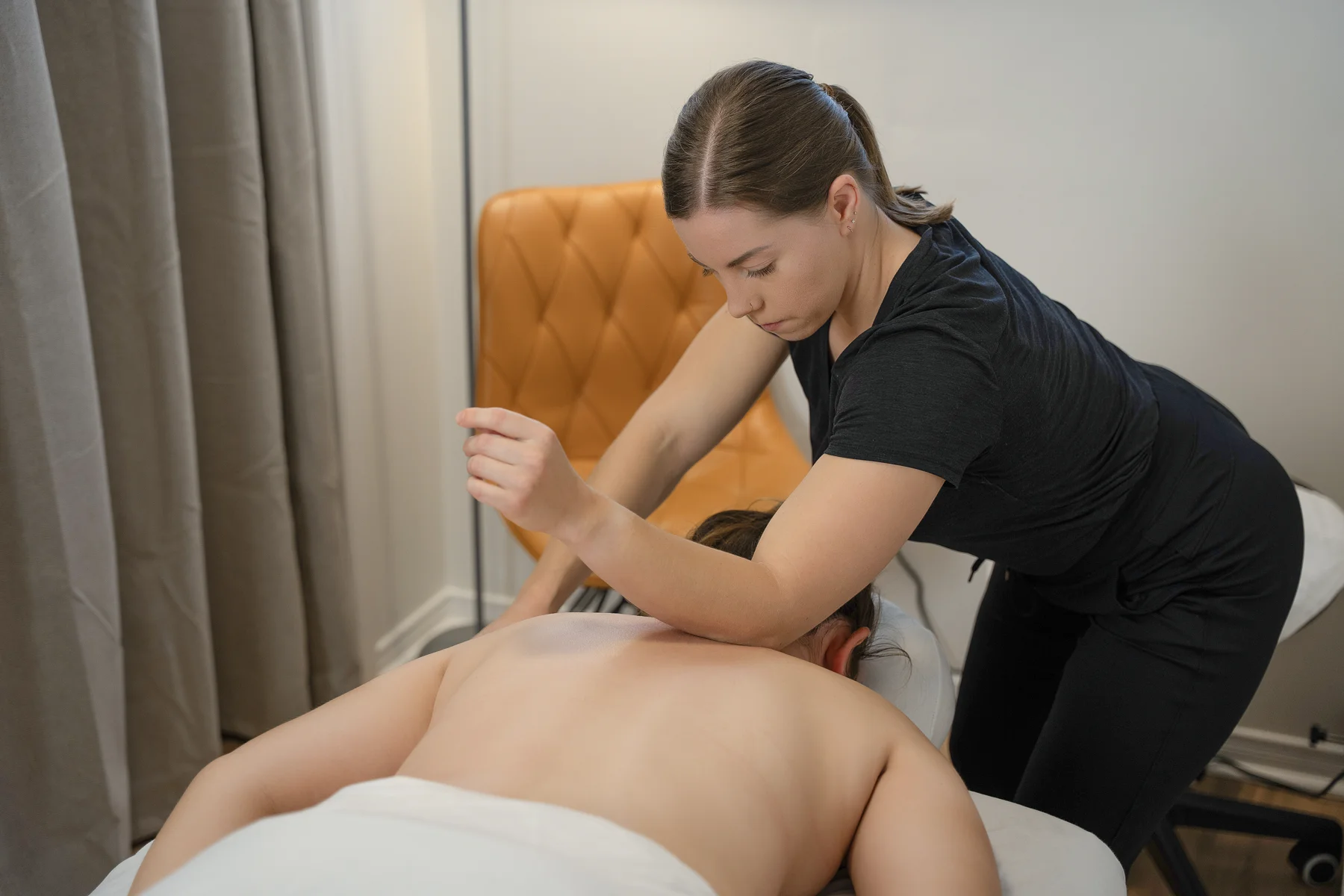
Restorative Massage for Stress & Tension
For widespread physical tension and a quieter, comfortably paced appointment during demanding periods.
Ongoing demands can show up as jaw clenching, tight shoulders or difficulty feeling at rest. Physical care can support comfort while the broader sources of strain also receive attention.
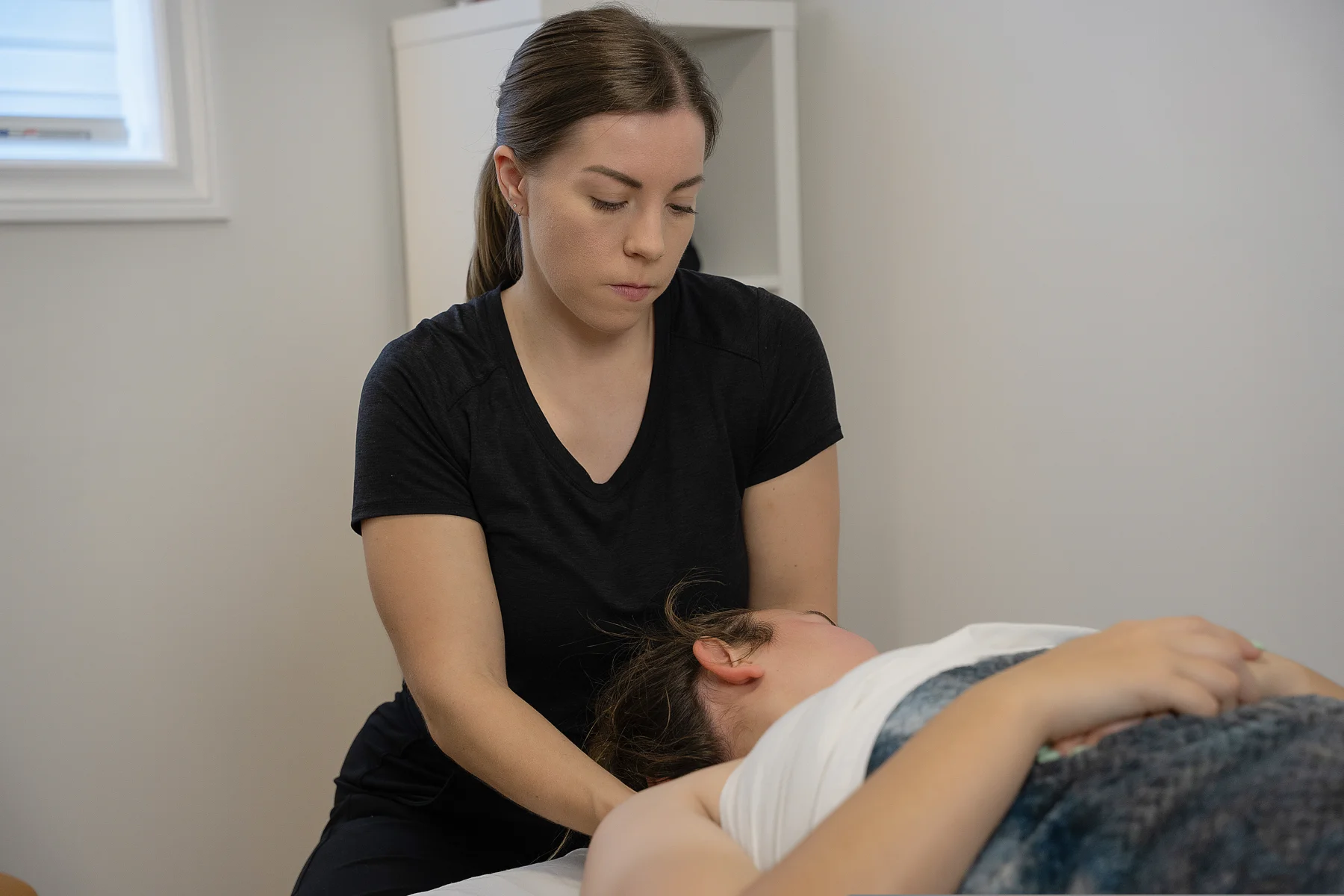
Stress can be accompanied by muscular tension, headaches, disrupted sleep and difficulty settling. These symptoms can also have other causes, so ongoing or changing concerns should not simply be dismissed as stress.
Burnout has a specific occupational meaning related to chronic workplace stress. People also use the word more broadly to describe exhaustion and feeling overwhelmed.
Massage may address physical tension and provide time for rest. It does not remove the circumstances causing stress or replace appropriate mental health or medical support.
When you spend much of your day responding to other people, even conversation can feel like another demand.
You can ask for:
These preferences help shape the appointment. You can change them at any point.
You may notice yourself clenching while answering emails, holding your shoulders tightly during a busy shift or struggling to get comfortable once the day is over.
Your appointment gives these physical concerns dedicated attention. Tell your therapist where you feel tension and whether you prefer focused treatment or a broader restorative massage.
Pressure, positioning and conversation can all be adjusted. You do not need to explain everything that is happening in your life to ask for an appointment that feels comfortable and restorative.
Care focuses on the muscular and movement concerns relevant to your symptoms. Explore the service pages for appointment details and what to expect.
For widespread physical tension and a quieter, comfortably paced appointment during demanding periods.

For stress-associated jaw clenching and face, scalp or neck tension when these are your main physical concerns.
Burnout is commonly used to describe feeling depleted and overwhelmed. In its formal occupational definition, it relates to chronic workplace stress.
Massage can provide space for rest and care for physical tension. It cannot resolve an unmanageable workload or replace support for ongoing anxiety, depression or other mental health concerns.
If exhaustion, mood changes or difficulty coping persist, speak with an appropriate healthcare professional.
No. You can simply describe your physical concerns and treatment preferences. You do not need to share personal experiences to request quiet, particular positioning or changes in touch.
That is okay. Relaxation is not a task you have to complete. Tell your therapist if anything would make the experience more comfortable.
We offer care for physical tension and an opportunity to unwind. Burnout may require changes to the circumstances creating stress and support beyond massage therapy.
Choose Restorative Massage when your priority is unwinding and easing overall tension. Choose Targeted Massage if a particular painful area or movement concern is your main reason for booking.
Choose a focused or full-body restorative appointment and let us know what would help you feel comfortable.