
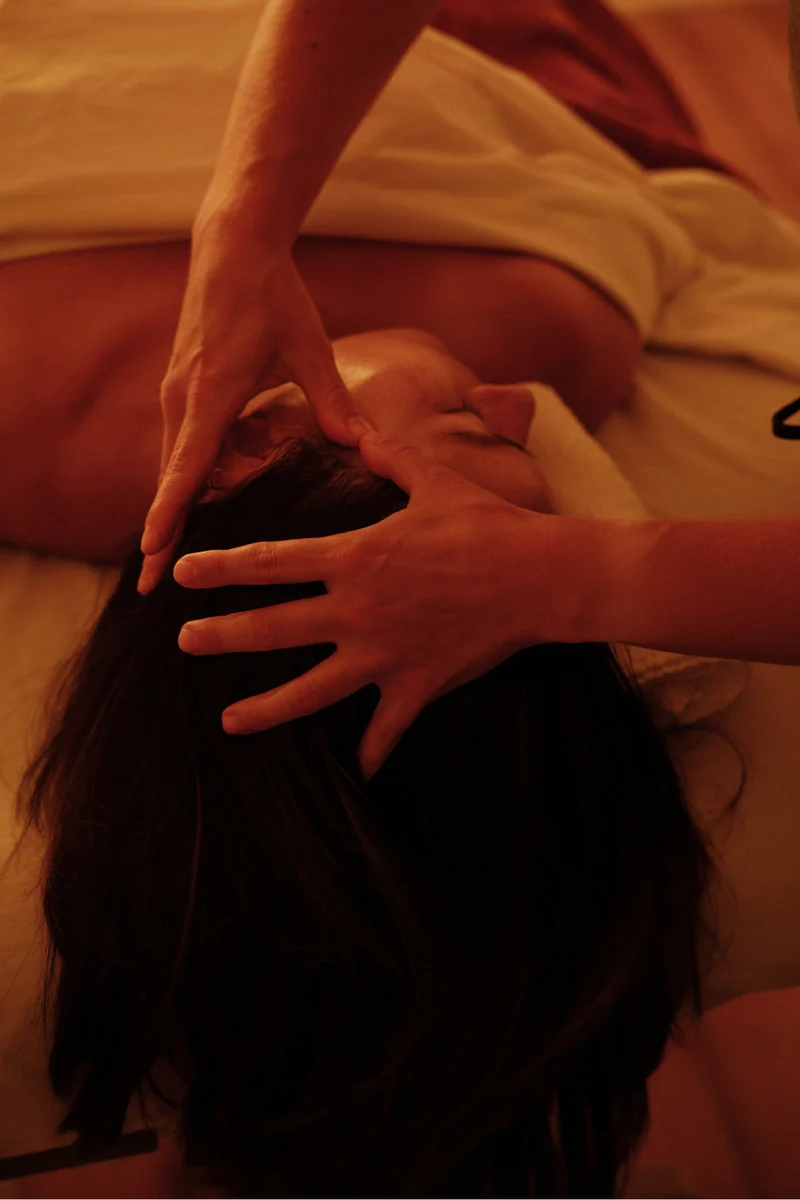
Therapeutic Facial Massage
For tension concentrated in the face, jaw, temples and scalp. Care can include external jaw work and consent-based buccal massage for relevant chewing muscles.
Jaw discomfort can affect chewing, yawning and how comfortably your mouth opens. Understanding whether symptoms involve the chewing muscles, the joint or both helps identify the right next step.
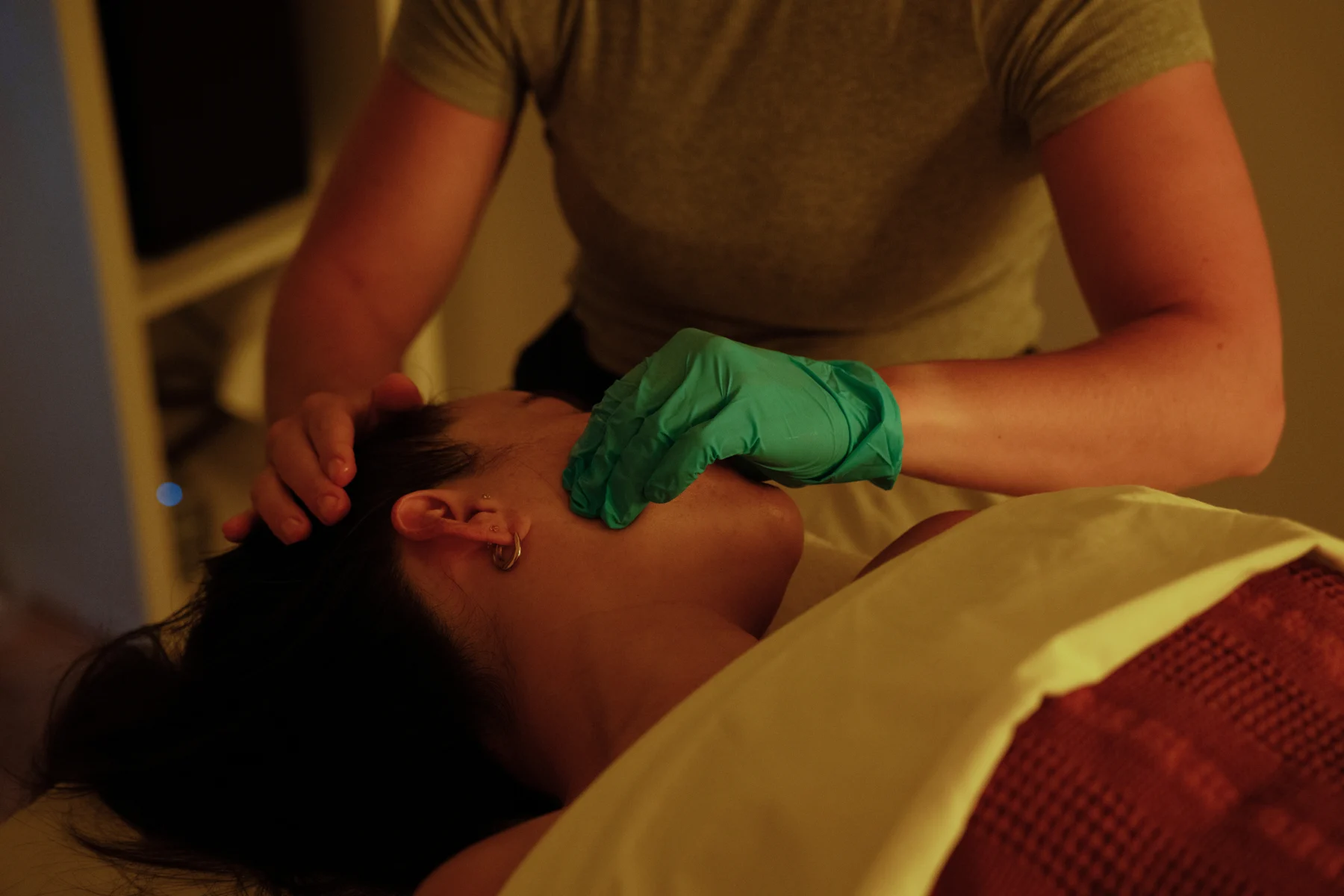
The temporomandibular joints, or TMJs, connect your lower jaw to your skull just in front of each ear. Together with the chewing muscles, they let you speak, chew and open your mouth.
Temporomandibular disorders, also called TMJD, describe a group of muscle and joint problems rather than a single diagnosis. Pain, tenderness, restricted opening and locking can have different explanations.
A click without pain or restricted movement does not necessarily need treatment. Painful clicking, a changing bite or difficulty opening deserves dental or medical assessment.
Jaw fatigue while chewing, tenderness through the cheeks and temples, and difficulty opening comfortably are useful details to share. Tell your practitioner if you also experience painful clicking, locking or headaches.
Tell your practitioner about painful clicking, locking, changes in your bite or difficulty opening your mouth. These concerns may also need dental or medical assessment. Clicking without pain or movement difficulty does not automatically require treatment.
When assessment identifies relevant muscular tension, treatment can focus on the chewing muscles and associated neck or scalp discomfort. Goals might include less tenderness and more comfortable chewing or opening.
Your response helps guide care. Muscle treatment does not correct every joint problem, diagnose dental pain or guarantee that grinding or clicking will stop.
Notice whether discomfort is worse on waking, during meals, after prolonged chewing or during periods of clenching. Share your dental history and any night-guard recommendations.
Follow changes in chewing comfort, tenderness and ease of opening. These practical changes are more useful than expecting a joint sound alone to disappear.
Choose according to where symptoms are concentrated. The linked service pages explain techniques, appointment lengths, preparation and booking.
For tension concentrated in the face, jaw, temples and scalp. Care can include external jaw work and consent-based buccal massage for relevant chewing muscles.
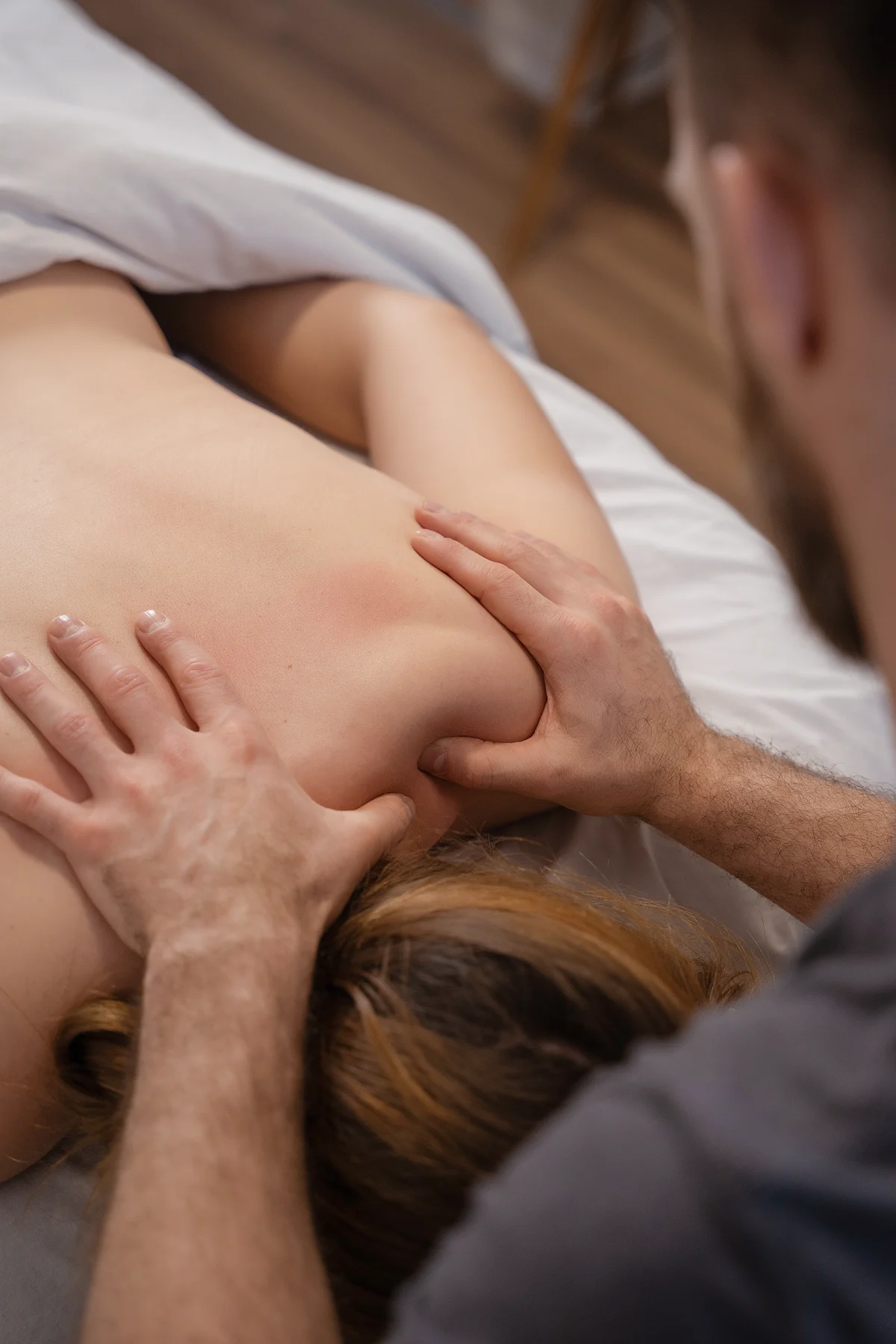
For jaw concerns that occur alongside more extensive neck, shoulder or upper-back muscular discomfort. Assessment helps prioritize the areas relevant to you.
Arrange an assessment for jaw locking, a changing bite, persistent tooth pain or an injury. A dentist can assess dental and joint concerns and discuss care for grinding where appropriate.
Sudden swelling, significant injury or difficulty swallowing or breathing requires prompt medical attention.
Not necessarily. Painless sounds without restricted movement can occur without needing treatment. Clicking that is painful, changes suddenly or comes with locking should be assessed.
Massage may address accompanying muscular tension, but it does not reliably stop grinding. Discuss tooth wear, bite concerns or night-guard advice with your dentist.
Mention both during assessment. The timing of clenching, temple discomfort and headaches can help guide which concerns need further assessment and which muscular areas may benefit from care.
Read about the treatment that fits your concerns, or book an appointment to discuss your symptoms and goals.